
The gaming industry connects with society through many specialties and industries, including aviation. As an aviator, I find the gaming industry’s impact on piloting transformative. New technologies, like virtual reality and simulation, have changed the flying industry. Console games also play a big role in this transformation. These advances have expanded aviation’s reach. They offer a larger audience and new opportunities to engage with flying as a hobby or career.
The journey started in the early 1990s with games like Pilotwings (1990). It wasn’t a realistic flying simulation, but it was a fun introduction to flying, created by Nintendo. Today, we have games like Ace Combat 7: Skies Unknown (2019). They let players pilot fighter jets in stunning detail.
Modern games are super detailed. They show things like scratches on windshields and how light moves in the cockpit. This gives aviators and flying fans a realistic and exciting experience.
New consoles, released in late 2020, have made these simulators even better. Simulators are a great way to practice for aviators in training. They immerse users in a specific plane. They can’t replace real-life training. But, they are good for tough situations. This includes bad weather, engine failures, fires, and even hijackings.
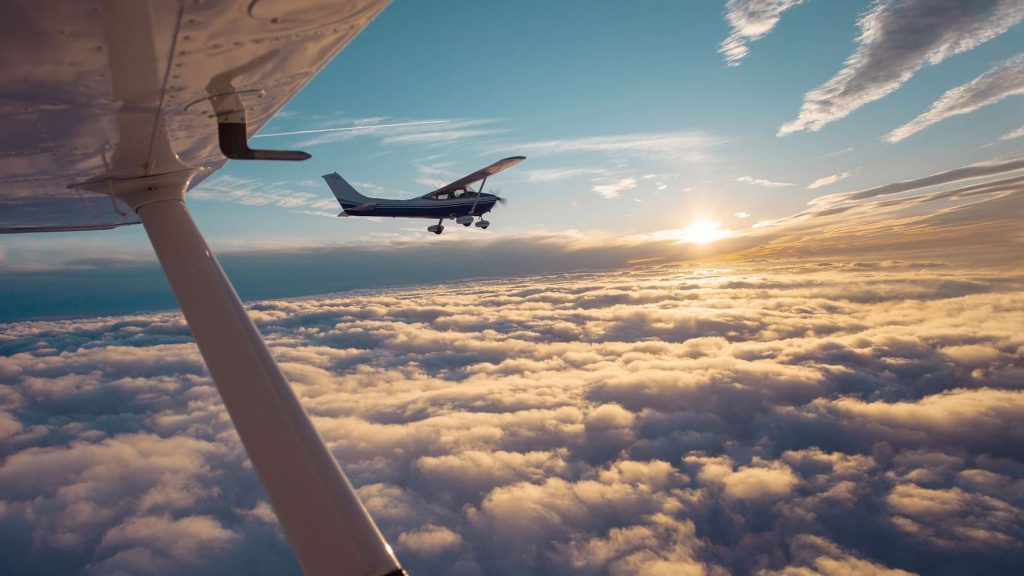
The gaming industry blends fun and learning. It keeps changing how aviators train and fly, pushing the limits of what’s possible.
It’s interesting. Some people avoid using simulations or video games to teach new pilots. They have a traditional mindset: “That’s not how I learned.” We all know people like this. It’s up to the younger generation to show how useful these tools can be. Some may be costs, time, or the number of employees, students, or instructors. While students wait for their turn in the cockpit, they can use simulators to practice. This will help them get comfortable. Flying a plane for this should boost confidence. It will hopefully relax students and instructors alike.
Not all flying games are meant to teach or instruct—sometimes, they’re for fun, and that’s totally fine. The extra detail in these games can help people learn. It depends on how realistic the game or simulator is.
Virtual Reality (VR), first created in the mid-1980s, has greatly improved over the past five years. Its amazing ability to immerse users makes it great for pilot training and simulations.
The Flight Simulator is the most recognized. It’s the one I used while learning, but there are others. It depends on what you are flying and what license you are pursuing or keeping up to date.